


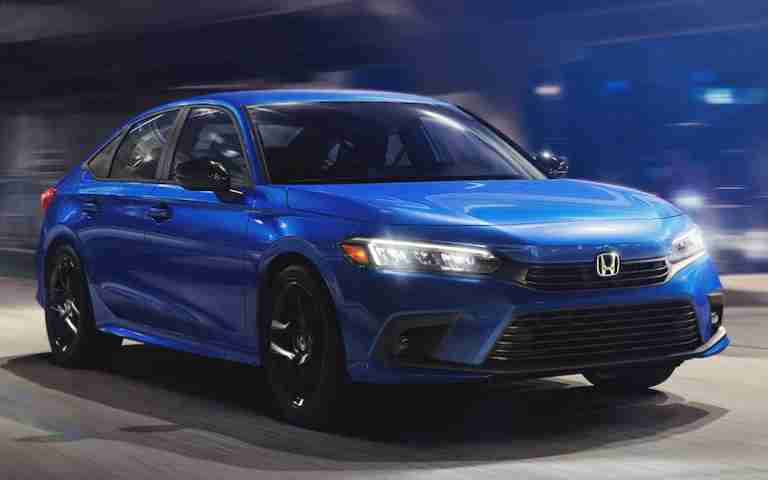
Asian Tech Press -- Japanese carmaker Honda Motor Co (NYSE: HMC) announced the end of production of hydrogen fuel cell vehicles (FCVs) from August 2021, according to Japanese media reports on July 7.
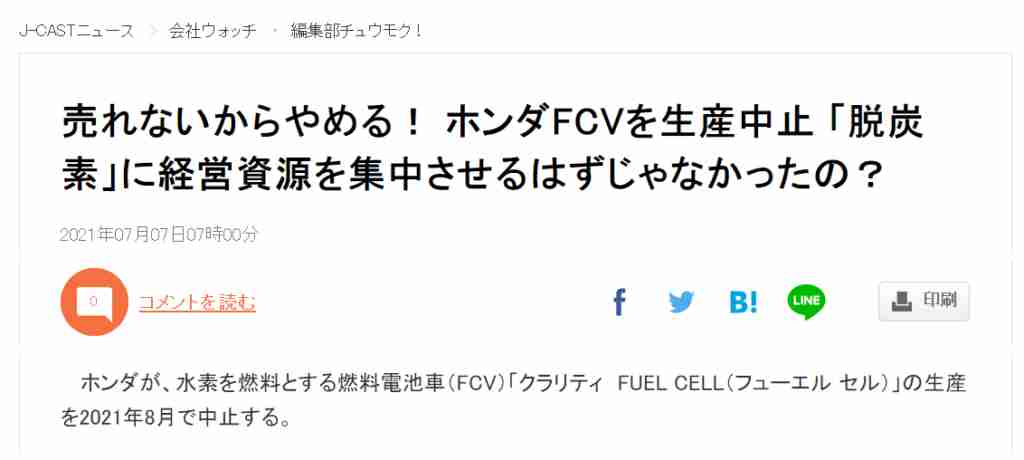 Japanese media reports on Honda's FCVs
Honda also declared in April this year that it would strive to sell only electric and hydrogen vehicles worldwide by 2040 to cut carbon emissions. A few months later, it then announced that it would stop the production of hydrogen FCVs, which is slightly abrupt.
Hydrogen FCVs rely on the chemical combustion of hydrogen and oxygen for power. And because they emit water and have no carbon dioxide emissions at all, they are the ultimate environmentally friendly cars. Compared to electric cars, it takes only 3 minutes to change the fuel in a hydrogen one.
However, hydrogen vehicles also have disadvantages, namely, more complex system construction than electric vehicles, and more strict requirements for constituent parts and fuel safety measures.
Honda, in line with the global trend of low carbon emissions, has invested heavily in the research and development of new energy vehicles. Of the 4.45 million vehicles the company sold worldwide in 2020, hydrogen cars account for less than 1%, with cumulative sales of just 1,900 vehicles.
Honda's passenger hydrogen cars did not go on sale until 2016, two years later than Toyota. But the price is as high as 7.83 million yen, making it difficult for the average consumer to accept compared to 2-3 million yen for a general passenger car.
In addition to the high price, there are only 147 hydrogen stations throughout Japan by June 2020. And the lack of infrastructure support is also one of the reasons for Honda's poor sales performance. It sold only 240 hydrogen vehicles in 2020 both in Japan and abroad.
For Honda's discontinuing hydrogen FCVs production, industry experts said the actual situation is that Honda is ready to close the Sayama plant next to Tokyo because of the bad sales performance of four rounds, and stop the FCVs production line of the plant.
However, Honda has not stopped its fuel cell business, and a new fuel cell vehicle developed in cooperation with GM is being prepared. Nor is it not producing fuel cell vehicles in the future, and it is now developing new ones.
Japan has used its technological advantage in the field of traditional cars to ignite the technology tree of hydrogen cars.
As the electric car industry surges forward with the investment of money and technology worldwide, Japanese automakers are beginning to realize that the modern industry's attempts to find another way out are unsustainable.
Honda has already begun to withdraw. So where will Toyota, another major Japanese automaker, go with its hydrogen vehicles?